Waterfront living in Brooklyn can mean very different things depending on where you land. You might picture dramatic bridge views, a classic promenade walk, or a quieter shoreline with wide harbor vistas and a more local rhythm. If you are trying to decide which stretch fits your life best, this guide will help you compare the feel, housing, and everyday advantages from north to south. Let’s dive in.
Brooklyn waterfront living at a glance
From DUMBO to Bay Ridge, Brooklyn’s waterfront works best as a lifestyle gradient rather than one single district. The northern end feels more design-forward and highly visible, the middle feels historic and promenade-centered, and the southern end feels more residential and neighborhood-local.
A practical thread that ties these areas together is the NYC Ferry South Brooklyn route. It connects DUMBO/Fulton Ferry, Atlantic Avenue at Brooklyn Bridge Park Pier 6, Red Hook, Sunset Park/Brooklyn Army Terminal, and Bay Ridge, linking residential communities, waterfront parks, and job centers in Midtown and the Financial District.
DUMBO offers lofts and skyline drama
If you want a waterfront home with a creative, polished feel, DUMBO stands out right away. Its built environment still reflects its industrial history, with loft buildings that were originally used for manufacturing and warehousing and later adapted for residential use.
That mix gives DUMBO a distinct housing profile. You will find converted lofts, mixed-use loft buildings, and some newer residential development, all set within a neighborhood known for ground-floor retail, galleries, and other design-oriented uses.
Brooklyn Bridge Park shapes daily life
One of DUMBO’s biggest advantages is direct access to Brooklyn Bridge Park. The park spans 85 acres and stretches 1.3 miles along the East River, with promenades, gardens, lawns, play areas, and expansive skyline views.
For many buyers, this is what makes the neighborhood feel special on an everyday basis. You are not just near the water. You are near a major public shoreline amenity that supports walking, relaxing, outdoor time, and an easy visual connection to Manhattan.
DUMBO balances waterfront and connectivity
DUMBO also gives you strong transit options. The South Brooklyn ferry landing sits at Old Fulton Street and Furman Street, and nearby subway access includes the F, A/C, and 2/3 lines.
That combination matters if you want a home that feels distinctly waterfront without giving up convenience. DUMBO offers that rare balance of being on the shoreline while staying closely connected to downtown Brooklyn and Lower Manhattan.
Brooklyn Heights brings promenade living
Brooklyn Heights offers a very different waterfront experience. It is the corridor’s most historically formal neighborhood and was designated New York City’s first historic district in 1965.
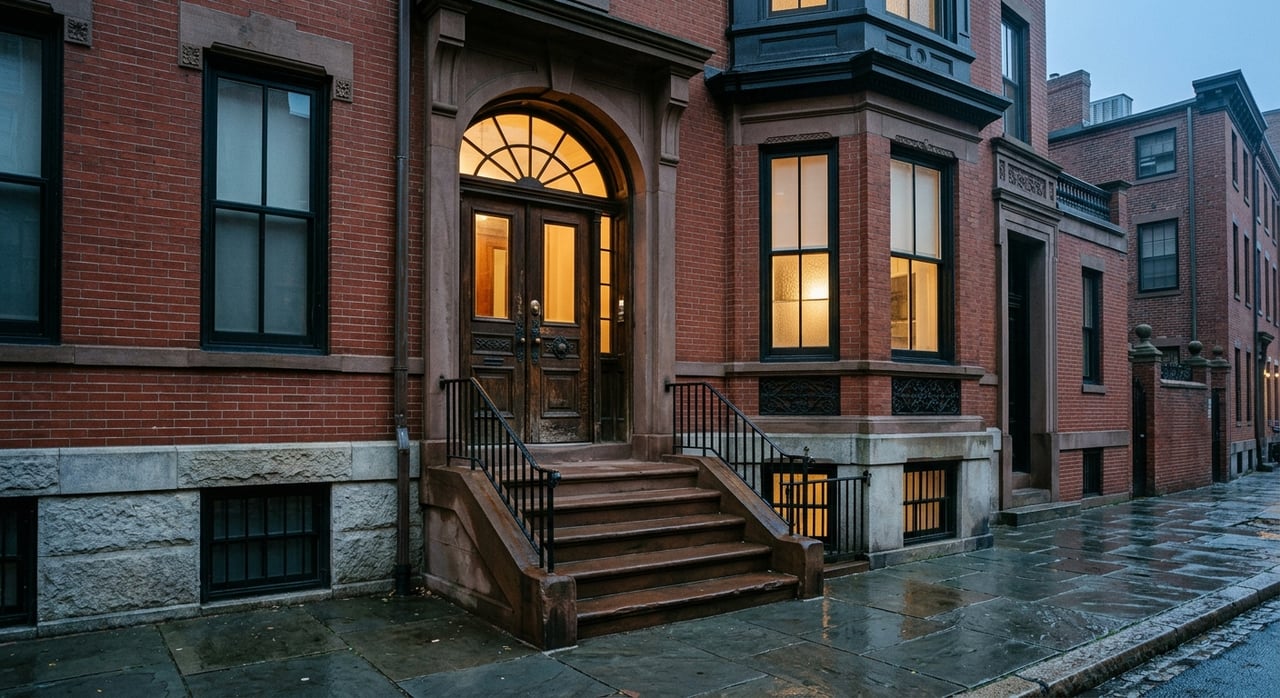
The area is largely residential, with brick and brownstone houses, stately churches, mews, other low-rise buildings, and some apartment houses. If you are drawn to classic architecture and a quieter streetscape, Brooklyn Heights often feels more timeless than trend-driven.
The Promenade defines the neighborhood
In Brooklyn Heights, the waterfront is not just an amenity. It is part of the neighborhood’s identity. The protected scenic view corridor tied to the western edge of the Brooklyn Heights Promenade reinforces how central those views are to the area’s character.
For you as a buyer, that means promenade access is more than a bonus. It shapes the daily experience of living here, whether you want a morning walk, an evening stroll, or a reliable place to take in harbor and skyline views.
Housing feels classic and residential
The housing mix in Brooklyn Heights leans traditional. Typical options include historic brownstones, rowhouses, older mansions, small houses, mews, and some apartment houses.
That makes the neighborhood especially appealing if you want waterfront proximity without a loft-style or newer-building feel. The overall impression is polished, established, and residential, with Montague Street serving as the principal shopping street.
Easy access adds flexibility
Brooklyn Heights also benefits from immediate access to the Brooklyn Bridge Park edge. Ferry landings at Pier 1 and Pier 6, along with nearby bridge access for walking and biking, make it easier to blend commute, exercise, and leisure into one routine.
For busy professionals and relocators, that kind of flexibility can be a major advantage. It gives you the visual and recreational benefits of waterfront living with a strong sense of day-to-day practicality.
Bay Ridge feels calmer and more local
At the southern end of this waterfront story, Bay Ridge offers a notably different pace. City materials describe it as a quiet bedroom community that has kept some village-like qualities while becoming denser and more urbanized.
That description helps explain why Bay Ridge often appeals to buyers looking for a more local and roomier shoreline experience. The neighborhood combines waterfront park space, New York Harbor views, and a less dense feel than DUMBO or Brooklyn Heights.
Harbor views are a major draw
One of Bay Ridge’s standout waterfront features is American Veterans Memorial Pier. NYC Parks highlights it as a popular fishing spot with views of the Verrazzano-Narrows Bridge, the Statue of Liberty, and the Manhattan skyline.
If your version of waterfront living involves open views and a calmer visual rhythm, Bay Ridge deserves attention. The shoreline here feels broader and more relaxed, with less of the intense urban framing found farther north.
Housing is more varied in scale
Bay Ridge’s housing pattern is intentionally more varied and lower-scaled than the loft conversions and larger waterfront forms seen farther north. City planning materials note efforts to preserve the neighborhood’s scale and character, protect limestone townhouse blocks, and maintain areas where detached homes are allowed.
You will typically see limestone-front townhouse blocks, detached homes in some subareas, apartment houses on main streets, and some larger residential complexes. That range can be helpful if you want more choice in housing type while staying within Brooklyn.
Main streets support daily convenience
Bay Ridge also offers neighborhood-scale commerce that supports everyday life. City materials identify 3rd Avenue as a dining corridor and 86th Street as a major shopping strip.
Transit remains part of the picture as well. The South Brooklyn ferry stops in Bay Ridge, and access is also available through local bus connections and the R train near Bay Ridge Avenue and 4th Avenue.
How the waterfront changes from north to south
If you are comparing neighborhoods, it helps to think less about which one is “best” and more about which one best matches your routine. Each part of the waterfront serves a different kind of buyer goal.
Here is the simplest way to frame it:
- DUMBO/Fulton Ferry fits buyers who want loft conversions, creative energy, and some of the strongest bridge and skyline views on the route.
- Brooklyn Heights fits buyers who want brownstones, classic architecture, and a waterfront life centered on the Promenade.
- Bay Ridge fits buyers who want a quieter shoreline, long harbor views, and a more neighborhood-driven setting.
Which Brooklyn waterfront lifestyle fits you?
Your decision may come down to how you want the waterfront to show up in daily life. In DUMBO, it can feel dramatic, design-focused, and closely tied to parks and transit. In Brooklyn Heights, it feels refined, walkable, and rooted in historic residential character.
In Bay Ridge, the waterfront often feels more open-ended and local. You still get access to views, parks, and ferry service, but the mood is calmer and less fast-moving.
If you are buying, this kind of comparison can help you narrow your search faster. If you are selling, understanding the specific lifestyle your stretch of waterfront offers can sharpen your pricing, positioning, and marketing.
Whether you are drawn to loft living in DUMBO, brownstone character in Brooklyn Heights, or a more relaxed shoreline in Bay Ridge, the right match starts with a clear understanding of how each neighborhood actually lives day to day. If you want tailored guidance on Brooklyn neighborhoods, pricing, or how to position your home for today’s market, connect with Maria Nica.
FAQs
What makes Brooklyn waterfront living different from one neighborhood to another?
- Brooklyn waterfront living changes from north to south, with DUMBO feeling more design-forward, Brooklyn Heights feeling more historic and promenade-centered, and Bay Ridge feeling more local and residential.
What type of homes are common in DUMBO waterfront areas?
- DUMBO is known for converted lofts, mixed-use loft buildings, and a smaller amount of newer residential development.
What is the main waterfront feature in Brooklyn Heights?
- The Brooklyn Heights Promenade is the defining waterfront feature, supported by protected scenic views and close access to Brooklyn Bridge Park.
What kind of housing can you expect in Brooklyn Heights?
- Brooklyn Heights typically includes historic brownstones, rowhouses, older mansions, mews, small houses, and some apartment houses.
Why do buyers consider Bay Ridge for waterfront living?
- Buyers often look at Bay Ridge for its calmer shoreline feel, wide harbor views, varied lower-scale housing, and neighborhood shopping and dining corridors.
How does the NYC Ferry connect Brooklyn waterfront neighborhoods?
- The South Brooklyn route connects DUMBO/Fulton Ferry, Atlantic Avenue at Pier 6, Red Hook, Sunset Park/Brooklyn Army Terminal, and Bay Ridge, linking waterfront communities and job centers.